


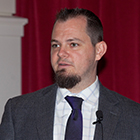
Michael Nair-Collins Ph.D.
Associate Professor
Biosketch
Michael Nair-Collins, Ph.D., a philosopher and bioethicist, is Associate Professor in the Department of Behavioral Sciences and Social Medicine at Florida State University College of Medicine. He teaches bioethics, research ethics, and health equity in the M.D., M.S., and Ph.D. programs. Dr. Nair-Collins completed his Ph.D. in Philosophy at the CUNY Graduate Center in 2010 and was an Ethics Fellow at Mt. Sinai School of Medicine from 2007-2010.
His 2026 book, A Theory of Death, provides a theory of biological death grounded in scientific realism and is published by Oxford University Press.
Education
|
Mount Sinai School of Medicine |
2007-2010 |
|
CUNY Graduate Center |
2010 |
|
CUNY Graduate Center |
2007 |
|
CUNY Graduate Center |
2007 |
|
William Paterson University |
2004 |
Service
National Service
Dr. Nair-Collins was an Observer Member of the Uniform Law Commission Study Group to Examine the Uniform Determination of Death Act (2020-2021) and the Uniform Law Commission Drafting Committee to Revise the Uniform Determination of Death Act (2021-2023).
Honors/Awards
University Graduate Teaching Award, Florida State University, 2016
Transformation through Teaching Award, Center for Leadership and Social Change, Florida State University, 2016
Research Focus
Professor Nair-Collins studies death, the mind, and morality, seeking a comprehensive philosophical view of how all three fit together. His major work, A Theory of Death (Oxford University Press 2026), provides a theory of biological death grounded in scientific realism. It is opposed to a family of views which claim that death is a social construction, a social choice, or a matter for linguistic decision. It develops a theory of life on Earth from multiple complementary perspectives, as a dynamic, thermodynamic, chemical, and physiological system embedded in an ancient evolutionary context, and explains death as the event when entropy overwhelms homeostasis.
He has also published extensively on the medical construct of "brain death," including its relationship to death, its diagnostic accuracy, relationship to organ transplatation and consent, and surrounding clinical and legal issues. He has further published articles and book chapters relating to medical futility, animal rights and postmortem brain reperfusion, and the sources of mental representation in biological systems.
Publications
Nair-Collins, M. 2026. A Theory of Death. NY: Oxford University Press.
Selected Academic Articles
- Nair-Collins, M. 2025. The Uniform Determination of Death Act is not changing. Will physicians continue to misdiagnose brain death? American Journal of Bioethics, 25(9), 44-55.
- Nair-Collins, M. 2024. Organismal Superposition and Death. Perspectives in Medicine and Biology 67(1): 22-30.
- Nair-Collins, M. 2023. Abortion, Brain Death, and Coercion. Journal of Bioethical Inquiry 20: 359-365.
- Nair-Collins, M. 2023. Must Hypothalamic Neurosecretory Function Cease for Brain Death Determination? Yes. The UDDA Revision Series. Neurology 101(3):134-136.
- Nair-Collins, M. and Joffe, A.R. 2023. Frequent Preservation of Neurologic Function in Brain Death and Brainstem Death Entails False-Positive Misdiagnosis and Cerebral Perfusion. AJOB Neuroscience 14(3): 255-268.
- Nair-Collins, M. 2022. Spinal Reflexes and Brain Death. Clinical Neurophysiology Practice 7:143-14
- Nair-Collins, M. 2022. Expanding the Social Status of “Corpse” to the Severely Comatose: Henry Beecher and the Harvard Brain Death Committee. Perspectives in Biology and Medicine 65(1):41-58.
- Nair-Collins, M. and Joffe, A.R. 2021. Hypothalamic Function in Patients Diagnosed as Brain Dead and its Practical Consequences. Handbook of Clinical Neurology vol. 182 (3rd series). The Human Hypothalamus: Neuropsychiatric Disorders. D. Swaab et al., eds. Elsevier.
- Nair-Collins, M. 2021. Evaluating the Translational Value of Postmortem Brain Reperfusion Technology. Translational Neuroscience 12:297-300.
- Nair-Collins, M. 2021. From the Slaughterhouse to the Laboratory Bench: On the Ethics of Using Slaughtered Animals for Biomedical Research. Perspectives in Biology and Medicine 64(2): 173-188.
Additional Information
Michael Nair-Collins, Ph.D., a philosopher and bioethicist, is Associate Professor in the Department of Behavioral Sciences and Social Medicine at Florida State University College of Medicine. He teaches bioethics, research ethics, and health equity in the M.D., M.S., and Ph.D. programs. Dr. Nair-Collins completed his Ph.D. in Philosophy at the CUNY Graduate Center in 2010 and was an Ethics Fellow at Mt. Sinai School of Medicine from 2007-2010.
His 2026 book, A Theory of Death, provides a theory of biological death grounded in scientific realism and is published by Oxford University Press.
|
Mount Sinai School of Medicine |
2007-2010 |
|
CUNY Graduate Center |
2010 |
|
CUNY Graduate Center |
2007 |
|
CUNY Graduate Center |
2007 |
|
William Paterson University |
2004 |
National Service
Dr. Nair-Collins was an Observer Member of the Uniform Law Commission Study Group to Examine the Uniform Determination of Death Act (2020-2021) and the Uniform Law Commission Drafting Committee to Revise the Uniform Determination of Death Act (2021-2023).
University Graduate Teaching Award, Florida State University, 2016
Transformation through Teaching Award, Center for Leadership and Social Change, Florida State University, 2016
Professor Nair-Collins studies death, the mind, and morality, seeking a comprehensive philosophical view of how all three fit together. His major work, A Theory of Death (Oxford University Press 2026), provides a theory of biological death grounded in scientific realism. It is opposed to a family of views which claim that death is a social construction, a social choice, or a matter for linguistic decision. It develops a theory of life on Earth from multiple complementary perspectives, as a dynamic, thermodynamic, chemical, and physiological system embedded in an ancient evolutionary context, and explains death as the event when entropy overwhelms homeostasis.
He has also published extensively on the medical construct of "brain death," including its relationship to death, its diagnostic accuracy, relationship to organ transplatation and consent, and surrounding clinical and legal issues. He has further published articles and book chapters relating to medical futility, animal rights and postmortem brain reperfusion, and the sources of mental representation in biological systems.
Nair-Collins, M. 2026. A Theory of Death. NY: Oxford University Press.
Selected Academic Articles
- Nair-Collins, M. 2025. The Uniform Determination of Death Act is not changing. Will physicians continue to misdiagnose brain death? American Journal of Bioethics, 25(9), 44-55.
- Nair-Collins, M. 2024. Organismal Superposition and Death. Perspectives in Medicine and Biology 67(1): 22-30.
- Nair-Collins, M. 2023. Abortion, Brain Death, and Coercion. Journal of Bioethical Inquiry 20: 359-365.
- Nair-Collins, M. 2023. Must Hypothalamic Neurosecretory Function Cease for Brain Death Determination? Yes. The UDDA Revision Series. Neurology 101(3):134-136.
- Nair-Collins, M. and Joffe, A.R. 2023. Frequent Preservation of Neurologic Function in Brain Death and Brainstem Death Entails False-Positive Misdiagnosis and Cerebral Perfusion. AJOB Neuroscience 14(3): 255-268.
- Nair-Collins, M. 2022. Spinal Reflexes and Brain Death. Clinical Neurophysiology Practice 7:143-14
- Nair-Collins, M. 2022. Expanding the Social Status of “Corpse” to the Severely Comatose: Henry Beecher and the Harvard Brain Death Committee. Perspectives in Biology and Medicine 65(1):41-58.
- Nair-Collins, M. and Joffe, A.R. 2021. Hypothalamic Function in Patients Diagnosed as Brain Dead and its Practical Consequences. Handbook of Clinical Neurology vol. 182 (3rd series). The Human Hypothalamus: Neuropsychiatric Disorders. D. Swaab et al., eds. Elsevier.
- Nair-Collins, M. 2021. Evaluating the Translational Value of Postmortem Brain Reperfusion Technology. Translational Neuroscience 12:297-300.
- Nair-Collins, M. 2021. From the Slaughterhouse to the Laboratory Bench: On the Ethics of Using Slaughtered Animals for Biomedical Research. Perspectives in Biology and Medicine 64(2): 173-188.